

How Much Space Does a Dumpster Truck Need for Delivery? Gladu Disposal's Placement Guide
Introduction
Renting a roll-off dumpster can make a home cleanout, renovation, landscaping project, or construction job much easier. Before the container arrives, though, there is one practical detail that deserves attention: Does your property have enough space for the delivery truck to place the dumpster safely? A driveway may look large enough to hold a dumpster, but the delivery truck needs more room than the container itself. The driver must approach the placement area, maneuver the truck, position the container, and unload it without hitting vehicles, garage doors, fences, trees, utility lines, or other obstacles. The amount of space required depends on the truck, the dumpster size, the property's layout, and the surface where the container will sit. Planning ahead helps prevent delivery delays, unnecessary repositioning, and last-minute changes to your project. For homeowners, contractors, and businesses in Rhode Island and Southern Massachusetts, understanding these requirements makes it easier to prepare a suitable placement area before scheduling a roll-off dumpster. Gladu Disposal & Self Storage, a family-owned company based in Woonsocket, Rhode Island, provides roll-off dumpster rentals in 10-, 15-, 20-, and 25-yard sizes. Knowing how delivery space works can help customers select an appropriate location and communicate their needs before the truck arrives.
How Much Space Does a Dumpster Truck Need for Delivery?
A dumpster truck generally needs more room than the dumpster's footprint because the vehicle must maneuver and unload the container. The exact clearance requirements vary by truck design, container size, driveway configuration, and overhead or side obstacles. As a preliminary planning guideline, a customer may want to evaluate an open, straight approach with approximately 60–100 feet of usable length for a roll-off delivery truck, along with adequate width and vertical clearance. This is only a rough planning range, not a universal requirement. Some trucks and sites need less room, while tight driveways, large containers, slopes, or restricted approaches may require more. Before relying on any general measurement, confirm the actual requirements with the dumpster rental provider. The truck used for delivery and the layout of your property determine what will work.
Why the Truck Needs More Space Than the Dumpster
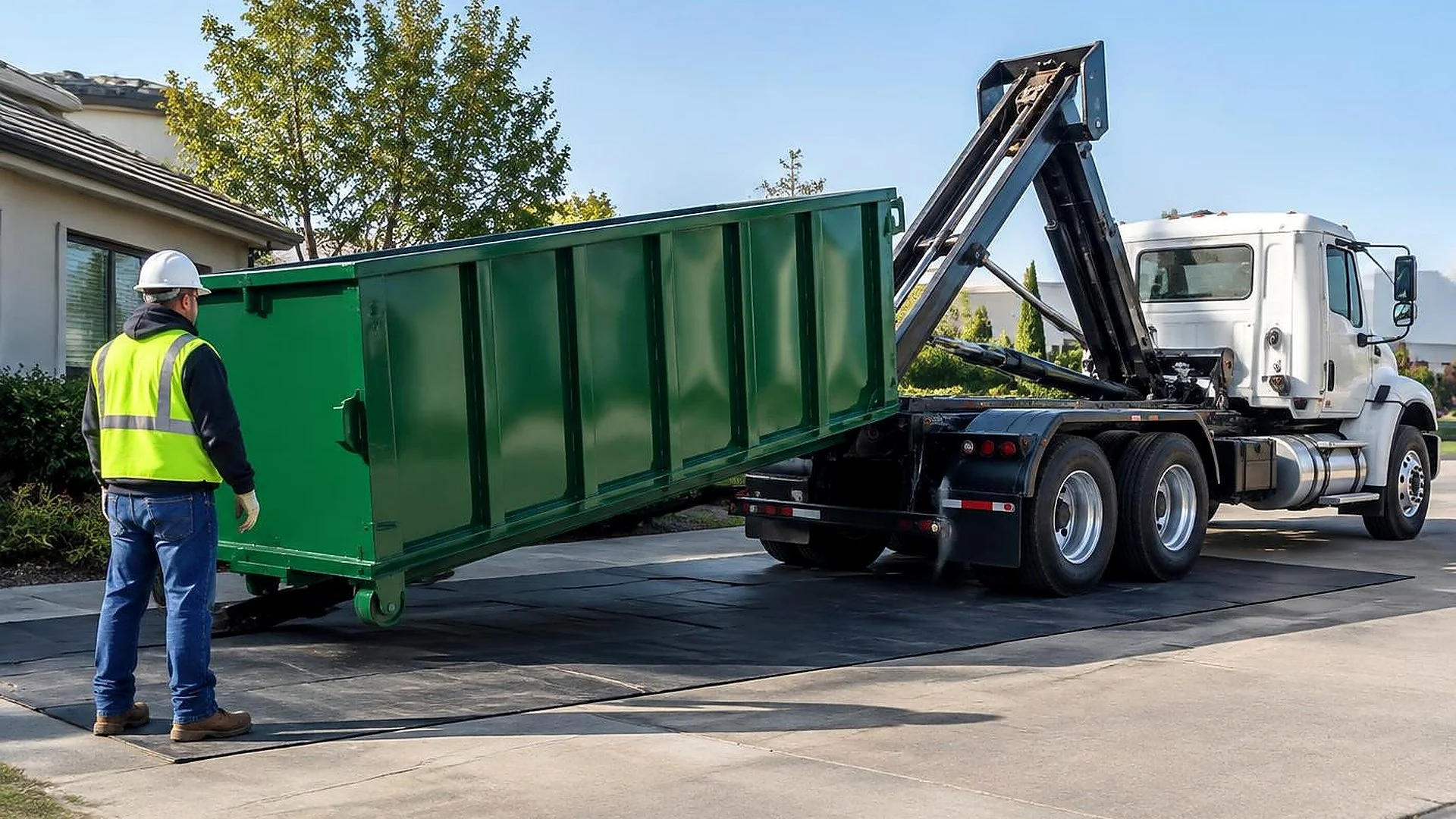
A roll-off dumpster is delivered on a specialized truck that carries the container on its chassis. During unloading, the driver positions the vehicle and uses a hoist or cable system to move the container off the truck and onto the ground.
This process requires room for several things:
Approach space: The truck needs enough distance to reach the placement area and line up correctly.
Maneuvering space: The driver may need room to turn, straighten the vehicle, or adjust its position.
Unloading clearance: The truck needs space for the container to move backward and down onto the ground.
Overhead clearance: Branches, wires, roof overhangs, and other structures can interfere with the truck or container during unloading.
Safe working space: The placement area must allow the delivery to happen without striking nearby objects or creating an unsafe situation.
A spot that can physically hold a dumpster may still be unsuitable for delivery if the truck cannot reach it or unload the container safely.
Does Every Dumpster Size Need the Same Delivery Space?
No. The space required depends partly on the dumpster and the equipment used to deliver it. Larger containers can be longer or heavier, and the delivery truck may need a different setup to place them. A 10-yard dumpster may be a practical choice for a smaller residential cleanout, while a 20- or 25-yard container may suit a larger renovation or construction project. However, a smaller dumpster does not automatically solve a restricted-access problem. Even a compact container must be delivered by a truck that can reach the placement area. The best approach is to identify the type and amount of debris you expect, choose a suitable container, and then confirm the delivery space needed for that specific rental.
What Areas Should You Measure Before Dumpster Delivery?
Measuring only the driveway's length is not enough. A useful site check includes the truck's approach, the unloading area, the container's final footprint, and the obstacles around it.
1. Measure the Available Length
Start by measuring the distance from the entrance to the intended placement area. Include the space the truck will need to approach and position itself, not just the area where the dumpster will sit. Look for anything that could shorten the usable distance, such as a parked vehicle, a narrow turn, a garage, a retaining wall, or a sharp change in driveway direction. If the truck must reverse into the property, the approach may require additional room. When you speak with the rental provider, describe the driveway layout and ask how much straight-line clearance its delivery truck needs.
2. Check the Width of the Driveway and Entrance
A driveway may be long enough but too narrow for the truck to enter comfortably. Measure the narrowest point along the route, including the entrance between gateposts, walls, hedges, or parked vehicles. Pay attention to turning areas as well. A wide driveway entrance may lead to a narrow section that prevents the truck from aligning with the placement spot. If access is limited, share the measurements before delivery. The provider can help determine whether the location is workable or whether another placement area should be considered.
3. Look Above the Delivery Route
Overhead obstacles are easy to overlook because people naturally focus on the ground. However, low tree branches, utility lines, awnings, balconies, roof overhangs, and carports may interfere with the truck or container during delivery. Walk the entire route from the street to the placement area and look upward. Check both the entrance and the exact location where the dumpster will be set down. Do not assume that clearance is sufficient just because a regular passenger vehicle can pass underneath an obstacle. A delivery truck and a raised or moving container have different clearance requirements. Ask the provider for the required vertical clearance before scheduling delivery.
4. Inspect the Ground and Surface
The ground must support the dumpster and the delivery process. A paved driveway may be suitable, but its condition matters. Cracked pavement, soft shoulders, loose gravel, muddy ground, and uneven surfaces can create problems. Consider whether recent rain, snow, or thawing conditions could make the area unstable. A surface that normally feels firm may not support a heavy delivery vehicle or a loaded dumpster under wet conditions. If you plan to place a dumpster on grass, gravel, or another unpaved surface, tell the rental company in advance. Ask whether the location is suitable and whether protective boards or another preparation method is recommended.
How Much Space Do Different Dumpster Sizes Need?
Dumpster capacity is usually measured in cubic yards, which describes volume rather than the exact dimensions of the container. Two containers with the same capacity can have different physical dimensions depending on their design.
Why Container Dimensions Matter
A dumpster's capacity does not tell you exactly how long, wide, or tall it will be. If the placement area is close to a garage, fence, building, or parked vehicle, the physical dimensions matter more than the yardage number alone. Ask for the dimensions of the specific container being supplied. Then measure the proposed placement area and consider how the dumpster will sit in relation to nearby structures. Leave enough room for practical access to the container's opening, if applicable, and for the work you intend to perform. Avoid positioning it where people must squeeze between the dumpster and a wall or step into an active driveway lane to load debris.
Where Is the Best Place to Put a Roll-Off Dumpster?
The best placement area is accessible to the delivery truck, stable enough to support the container, and convenient for the people using it. It should also comply with any applicable property rules and local placement requirements.
Driveway Placement
A driveway is often a convenient choice because it may provide a relatively firm, level surface close to the house. It can also keep the dumpster off the street, where public-space restrictions might apply. Before selecting the driveway, move cars and other items out of the delivery path. Check for overhead branches and make sure the truck can enter, align, and unload without being blocked by a garage or other structure. If you are concerned about driveway damage, discuss surface protection with the provider. Boards or other protective materials may help in some circumstances, but they cannot guarantee that a surface will remain undamaged.
Yard or Gravel Placement
A yard can provide an alternative when the driveway is too short or occupied. However, grass and soil may become soft under wet conditions, and a loaded dumpster can leave ruts or disturb landscaping. Gravel can be suitable in some situations, but its stability depends on the base, compaction, drainage, and condition of the surface. Do not assume that every gravel area is appropriate for a heavy container. Describe the surface and its condition before delivery. If the area slopes, becomes muddy, or has underground features that could be affected by heavy equipment, discuss another location with the rental provider.
Street or Public Right-of-Way Placement
Placing a dumpster on a street, sidewalk, or other public area may require permission or a permit. Requirements vary by municipality and by the exact location. Before planning street placement, contact the relevant local authority to ask whether a permit is required, what restrictions apply, and whether safety measures such as reflective markings or traffic controls are necessary. Do not assume that a dumpster can be placed on a public street simply because there is enough physical space. In Rhode Island and Southern Massachusetts, the rules may differ between towns and cities. Confirm the requirements for the specific property rather than relying on another municipality's rules.
What Can Prevent a Dumpster Truck From Delivering Successfully?
Even a property that appears suitable may present an access problem when the truck arrives. Many of these issues can be prevented by inspecting the site and communicating with the rental company beforehand.
Parked Cars and Other Obstructions
Vehicles, trailers, trash bins, basketball hoops, landscaping equipment, and construction materials can block the truck's approach. Move them before the scheduled delivery and keep the route clear until the container is in place. If neighbors commonly park along a narrow street, consider whether their vehicles could prevent the truck from turning into the property. Arrange access in advance where possible.
Tight Turns and Steep Slopes
A narrow entrance or sharp turn can make a driveway difficult to access even if it appears wide enough when measured in a straight line. Steep driveways and uneven transitions can also affect the truck's ability to position itself safely. Take photographs of the entrance, turning area, and placement spot if the layout is unusual. Share them with the provider so the access conditions can be reviewed before the delivery date.
Low Branches and Utility Lines
Branches can obstruct the truck's path, while utility lines may create a serious overhead hazard. Never attempt to move or lift electrical wires yourself to make room for a delivery. If an overhead obstruction appears close to the route, inform the rental company and ask whether a different placement area is needed. Any work near utility lines should be handled by the appropriate qualified professionals.
Soft Ground or Unstable Surfaces
Mud, loose soil, steep shoulders, and poorly supported pavement may prevent the truck from safely reaching the intended location. A container placed on an unsuitable surface can also shift or sink. Choose a firm area whenever possible. If the property has recently been excavated or is affected by heavy rain, mention those conditions before delivery.
How to Prepare Your Property for Dumpster Delivery
A short preparation routine can reduce confusion on delivery day and help the driver place the container where you need it.
Step 1: Choose the Container and Confirm Its Dimensions
Estimate the volume and type of debris your project will generate. Select a suitable dumpster size, then ask the provider for the dimensions of the container planned for delivery. Do not choose a larger container solely because you want to avoid a second rental. Make sure the container is appropriate for the waste and can fit within the available placement area.
Step 2: Confirm Truck Clearance Requirements
Ask how much room the delivery vehicle needs for its approach, unloading, and overhead clearance. Explain whether the truck must enter a driveway, reverse through a gate, or maneuver around a building. If you are unsure about the space, provide measurements and photographs. It is better to identify a potential access issue before the truck is dispatched than to discover it at the property.
Step 3: Clear the Route and Placement Area
Remove vehicles, tools, bins, and other obstacles from the route. Check the full approach rather than focusing only on the final dumpster location. Make sure the chosen spot is accessible on the scheduled day. If another contractor or delivery vehicle is working at the property, coordinate schedules to avoid blocking the entrance.
Step 4: Check Local Rules and Property Restrictions
If the dumpster will occupy a street, sidewalk, shared driveway, or other restricted area, check the applicable requirements before delivery. Homeowners' associations, landlords, property managers, and commercial property owners may also have placement rules. Allow time to obtain any required permission. A convenient location is not necessarily an authorized one.
Step 5: Confirm the Plan Before Delivery
Review the placement location, delivery date, container size, and access instructions with the rental provider. Mention unusual conditions such as a narrow gate, low branches, a steep driveway, or a surface that may be soft. If your plans change, contact the company before the truck arrives. An alternate placement spot may be possible, but it should be evaluated for access and safety.
Common Misconceptions About Dumpster Delivery Space
“If the Dumpster Fits, the Truck Can Deliver It”
Not necessarily. The container may fit in a driveway or yard while the delivery truck lacks the room needed to position itself and unload it.
The key is to measure the entire delivery route, not just the container's final footprint.
“A Smaller Dumpster Will Always Solve Access Problems”
A smaller container may help with the final placement area, but the delivery vehicle still needs enough space to reach the location. A narrow entrance, low overhead obstacle, or sharp turn can remain a problem regardless of dumpster size. Discuss the access limitation with the provider before assuming that downsizing will resolve it.
“Any Flat Surface Is Suitable”
A flat surface is helpful, but it also needs to be stable and accessible. Loose soil, weak pavement, hidden underground features, and poor drainage can create issues even when the ground looks level.
Consider the surface's condition as well as its shape.
“The Driver Can Work Around Every Obstacle”
Drivers can make reasonable positioning adjustments, but they cannot safely overcome every restriction. Low utility lines, inadequate turning space, unstable ground, and blocked access may prevent delivery. Clear communication and a realistic placement plan are safer than expecting the driver to improvise around a difficult site.
How to Make Dumpster Delivery Easier for Residential and Commercial Projects
Different projects have different access challenges. A homeowner clearing a garage may have to move family vehicles, while a contractor working on a renovation may need to coordinate delivery with other trades. For residential projects, choose a location that is convenient for loading but does not block essential access to the home. Make sure family members and visitors know where the truck will operate and keep children and pets away from the delivery area. For construction and commercial projects, coordinate the placement location with the site supervisor. Keep equipment, building materials, and other vehicles clear of the truck's route. If the site has restricted access hours, security gates, or delivery rules, communicate them before scheduling.
For properties with limited space, consider whether a different location on the same property would offer a straighter approach or firmer ground. A small change in placement can sometimes make delivery much easier, provided the new location meets the provider's clearance and safety requirements.
Conclusion
A successful roll-off dumpster delivery starts with more than finding an empty spot. The truck needs enough room to approach the property, maneuver into position, unload the container, and leave safely. The required space depends on the delivery vehicle, dumpster dimensions, driveway layout, overhead clearance, surface conditions, and any local placement restrictions. Before delivery, measure the route and placement area, clear vehicles and other obstructions, check for low branches and utility lines, and confirm the container's dimensions and clearance requirements with the rental provider. If you are considering a street or sidewalk location, check local permit rules before scheduling the drop-off. Gladu Disposal & Self Storage provides 10-, 15-, 20-, and 25-yard roll-off dumpster options for customers in Rhode Island and Southern Massachusetts. Preparing your site and discussing access conditions in advance can help you select a practical placement location and avoid preventable delivery problems.
Frequently Asked Questions
1. How much room does a dumpster delivery truck need?
The space required depends on the truck, container size, and property layout. A preliminary planning range of approximately 60–100 feet of usable approach length may be helpful, but it is not a universal requirement. Ask the rental provider for the specific clearance needed for its delivery equipment.
2. How wide does a driveway need to be for a dumpster truck?
There is no single driveway width that works for every delivery truck. The entrance, narrowest section, turning radius, parked vehicles, and surrounding obstacles all affect access. Measure the narrowest points and confirm the requirements with the provider before delivery.
3. How much overhead clearance is needed for a roll-off dumpster?
Overhead clearance depends on the delivery truck and the way the container is unloaded. Low tree branches, utility lines, roof overhangs, and carports can interfere with delivery. Ask the provider for its clearance requirements and identify any overhead obstacles along the entire route.
4. Can a dumpster be delivered to a small driveway?
Possibly, but the truck must have enough room to enter, position itself, and unload safely. A smaller dumpster does not automatically solve a narrow-access problem. Share measurements or photographs with the rental provider to help determine whether the location is suitable.
5. Can a dumpster be placed on grass or gravel?
It may be possible if the surface is stable enough to support the container and the delivery process. Soil conditions, drainage, slopes, and recent rainfall can affect suitability. Discuss the surface with the rental provider before delivery, and ask about protective measures if you are concerned about damage.
6. Can I put a roll-off dumpster on the street?
Street placement may be allowed, but local rules and permit requirements vary. Check with the municipality responsible for the street before arranging delivery. Also confirm any requirements for visibility, traffic safety, and the length of time the container may remain there.
7. What should I move before the dumpster truck arrives?
Move cars, trailers, trash bins, tools, construction materials, and other items that block the entrance or placement area. Check for low branches and make sure the truck's route will remain clear at the scheduled delivery time.
8. Does a larger dumpster require more delivery space?
A larger container may need a larger placement footprint, and the delivery setup can vary by container and truck. However, dumpster capacity alone does not determine the clearance required. Confirm both the container's dimensions and the delivery truck's access requirements.
9. What happens if the dumpster truck cannot access my property?
If the driver cannot reach or safely unload at the planned location, delivery may need to be postponed or an alternate placement area arranged. The options depend on the site's conditions and the rental provider's policies. Discuss tight turns, low obstacles, slopes, and other restrictions before delivery to reduce the chance of a problem.
10. How can I protect my driveway from dumpster damage?
Start by choosing a suitable, stable placement area and discussing surface protection with the rental provider. Protective boards may help in some situations, but they cannot eliminate every risk. Avoid placing the dumpster on damaged or unstable pavement without first discussing the conditions with the provider.
